Skip to content


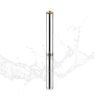
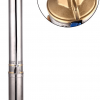
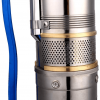
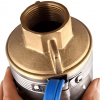
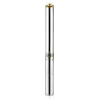
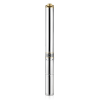
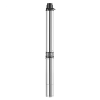
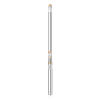
The deep well pump, manufactured from 304 stainless steel, is a durable well pump that will keep you in use for a couple of years. In addition, this deep well pump provides you with an advanced flow rate, producing a consistent flow up to quite a depth under the surface. With this deep well pump, you can quickly and conveniently get water even from greater depths.


More Product Details
All pumps will be packed in a standard export plywood
Deep Well Pump Structure

| Serial Number | Name |
|---|---|
| 1 | Neckar |
| 2 | cap |
| 3 | Hexagon socket head cap screws |
| 4 | Spring pad |
| 5 | Outlet |
| 6 | Xiao Ding |
| 7 | O-ring |
| 8 | Rubber bush |
| 9 | Cable sheath |
| 10 | Guard plate buckle |
| 11 | Phillips pan head screws |
| 12 | Cable shield |
| 13 | Guard buckle 2 |
| 14 | Phillips pan head screws |
| 15 | Pump barrel |
| 16 | Hexagon Screw |
| 17 | Spring pad |
| 18 | Flat pad |
| 19 | Ceramic bushing |
| 20 | Gasket |
| 21 | Bushing |
| 22 | support |
| 23 | Guide vane |
| 24 | impeller |
| 25 | Guide vane shell |
| 26 | Hexagon shaft |
| 27 | Bushing |
| 28 | Coupling |
| 29 | Cross countersunk head screws |
| 30 | O-ring |
| 31 | Button |
| 32 | Cross countersunk head screws |
| 33 | connection |
| 34 | Phillips pan head screws |
| 35 | Net cover |
| 36 | Shake Cup |
| 37 | Sand throwing gasket |
| 38 | Sand dump |
| 39 | Grease screw |
| 40 | O-ring |
| 41 | Cable assembly |
| 42 | Phillips head screw |
| 43 | Cable clamp |
| 44 | Cylinder head |
| 45 | Cylinder |
| 46 | Button |
| 47 | Cross countersunk head screws |
| 48 | O-ring |
| 49 | O-ring |
| 50 | socket |
| 51 | Socket pressure plate |
| 52 | Phillips head screw |
| 53 | Machinery Seal |
| 54 | Oil seal |
| 55 | Wave gasket |
| 56 | Insulating paper |
| 57 | Bearing |
| 58 | Rotor |
| 59 | Bearing |
| 60 | Coil |
| 61 | Insulating paper |
| 62 | Lower bearing seat |
| 63 | Barrel |
| 64 | capacitance |
| 65 | Naan |
| 66 | Bottom cover |
| 67 | Circlip |
Q1: What is a deep well pump and how does it work?
A: A deep well pump (most commonly a submersible deep well pump) is a specialized vertical centrifugal pump designed to be submerged directly into a borehole or deep well to push water to the surface.
Unlike shallow well jet pumps that pull water via suction, deep well pumps operate on the principle of multistage centrifugal force. Each stage consists of an impeller and a diffuser. As the impellers rotate, they increase the pressure of the water, lifting it efficiently from depths ranging from 100 feet to over 1,000 feet.
Q2: How do I choose the right deep well pump size for my project?
A: Sizing a deep well pump properly requires calculating three primary factors:
- Well Diameter: Deep well pumps are categorized by size (e.g., 3-inch, 4-inch, 6-inch, or 8-inch). Ensure the pump outer diameter is smaller than your well casing.
- Total Dynamic Head (TDH): This is the total vertical distance from the water level in the well to the highest point of discharge, plus friction loss in the piping.
- Flow Rate (GPM/m³h): Determine how much water you need per minute or hour based on your application (e.g., agricultural irrigation, industrial processing, or domestic supply).
Pro Tip: For industrial and heavy-duty drainage applications, always check the motor horsepower (HP) and material specifications (such as SS304 or SS316 stainless steel) to handle continuous runtime.
Q3: What is the difference between a shallow well pump and a deep well pump?
A: The primary difference lies in the operating depth and installation location:
- Shallow Well Pumps: Installed above ground and use suction to pull water. They are limited by physics to depths of under 25 feet (approx. 7.6 meters).
- Deep Well Submersible Pumps: Dropped directly down into the well casing. Because they push water upward rather than pulling it, they can easily handle depths from 100 to several thousand feet. They are also quieter and more energy-efficient because they don’t suffer from cavitation issues common to suction pumps.
Q4: Why is my deep well pump running but not pumping water?
A: If your submersible deep well pump is running but there is no water flow, the most common causes include:
- Dropped Water Table: The water level in the well has fallen below the pump intake.
- Clogged Intake Screen or Impellers: Sand, silt, or debris from the borehole may be blocking the water flow.
- Worn Impellers: Continuous pumping of abrasive particles can erode the pump stages over time, reducing pressure.
- Check Valve Failure: A faulty check valve can cause water to flow backward, creating air locks.
- Incorrect Motor Rotation: In three-phase power systems, if the wiring is reversed, the pump will run backward, generating very little pressure.
Q5: How long does a submersible deep well pump last?
A: A high-quality industrial deep well pump typically lasts between 10 to 15 years, depending on the water quality, frequency of use, and installation correctness. To maximize the lifespan of your pump, ensure it features:
- Sand-resistant design (e.g., floating impellers or high-chrome components) if pumping from sandy boreholes.
- Built-in motor protection against voltage fluctuations, phase loss, and dry-running.
Q6: Can a deep well pump handle sandy or muddy water?
A: Standard clean-water deep well pumps are highly sensitive to abrasives, which can quickly destroy impellers and seals. However, specialized submersible drainage pumps or deep well pumps with customized polyurethane or high-alloy rubber wear parts can handle mild sand content. If your application involves heavy solids, slurry, or mining drainage, you should opt for a dedicated heavy-duty submersible slurry/drainage pump rather than a standard water well pump.
Q7: What are the benefits of using a stainless steel deep well pump?
A: For international trade and industrial projects, Stainless Steel (SS304/SS316) is the preferred material choice over cast iron because it offers:
- Corrosion Resistance: Vital for acidic well water or chemical-heavy industrial environments.
- Longevity: Reduces the risk of rust contaminating the water supply and prevents premature structural failure.
- High Efficiency: Smoother internal surfaces minimize hydraulic friction, optimizing overall energy consumption.