Skip to content

The Hard Truth About Slurry Management
In high-concentration dredging and mining, there is no “one-size-fits-all” pump. Whether you are clearing a tailings pond or excavating harbor silt, the choice between Electric Submersible and Hydraulic Submersible power determines your uptime.
At Tussu Pumps, we specialize in the “heavy stuff”—slurries that would seize a standard sewage pump in minutes. Here is a technical breakdown of how our two flagship series perform in the field.
1. The Workhorse: Electric Submersible Slurry Pumps
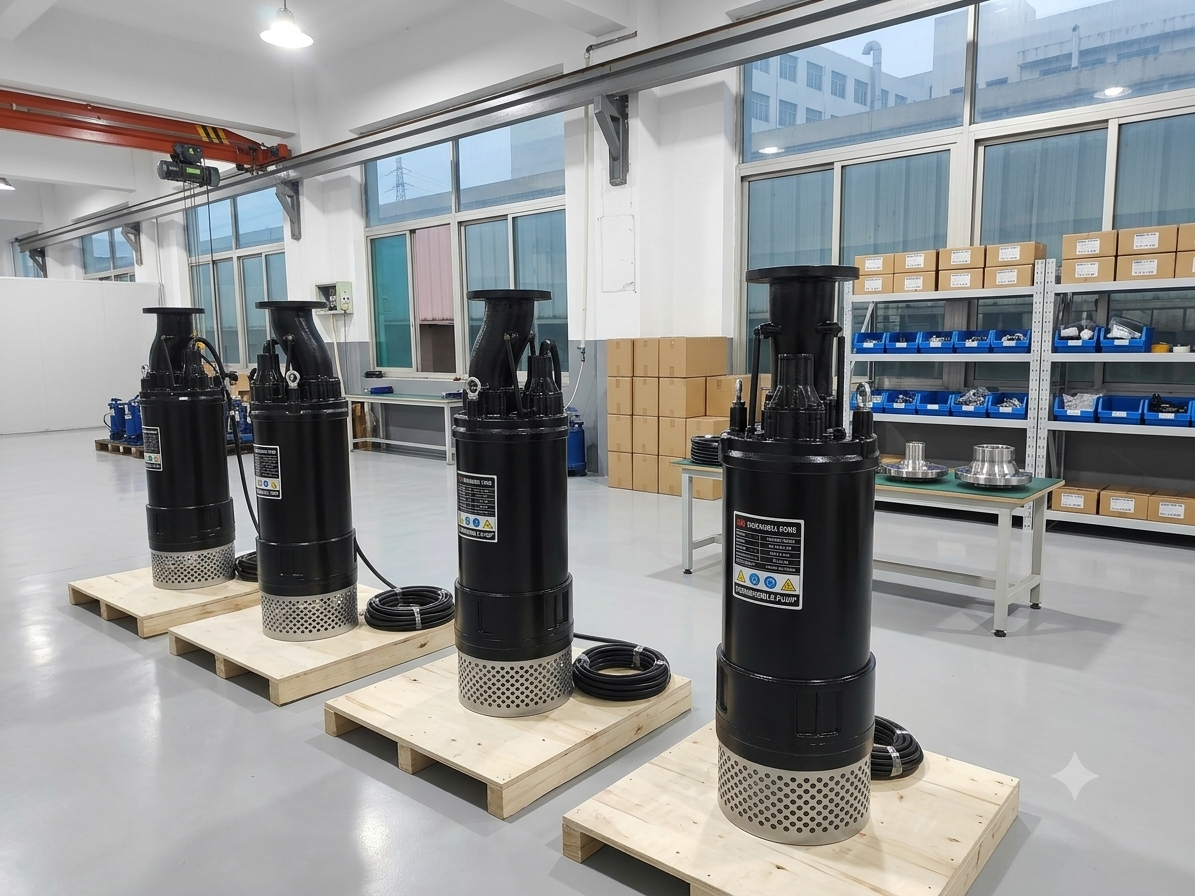
Our electric series is designed for permanent or semi-permanent installations where power infrastructure is available. These are the “set and forget” solutions for sumps and tanks.
-
Integrated Agitator: Unlike standard pumps that only suck in liquid, our electric slurry pumps feature a robust agitator that breaks up settled solids, ensuring a high-density discharge.
-
Precision Control: Ideal for operations requiring constant flow rates.
-
Case Study (Mauritius): In February 2026, we supplied 3/2C-AH series submersible pumps to a coastal mining project in Mauritius. By utilizing our Cr27 high-chrome wear parts, the client achieved a 40% increase in service life compared to their previous rubber-lined units, despite the abrasive nature of the local volcanic sand.
2. The Powerhouse: Hydraulic Submersible Slurry Pumps
When you are working in remote areas or need to attach a pump directly to an excavator, Hydraulic Submersible Slurry Pumps are the superior choice.
-
Variable Speed & Torque: Hydraulic motors allow you to adjust the RPM on the fly, making them perfect for varying material densities.
-
Mobility: These pumps are frequently mounted on excavator arms, replacing the bucket to turn the machine into a mobile dredging unit.
-
Case Study (UAE): For a major harbor expansion in the UAE, Tussu Pumps provided high-torque hydraulic units. Because these pumps lack sensitive electrical components, they operated flawlessly in the high-heat, high-salinity environment of the Persian Gulf, handling 60% solid-by-weight concentrations without overheating.
Technical Comparison: At a Glance
| Feature | Electric Submersible | Hydraulic Submersible |
| Best For | Fixed sumps, mining tanks | Remote sites, excavator attachments |
| Material | Cr27 High-Chrome Alloy | Cr27 High-Chrome Alloy |
| Power Source | Grid / Generator | Excavator / Hydraulic Power Pack |
| Maintenance | Low (Internal seals) | Moderate (Hydraulic lines) |
| Solids Handling | Up to 45% by weight | Up to 70% by weight |
“Street-Smart” Maintenance: Listen Before You Leap
As any field engineer will tell you, a pump “talks” to you. To avoid a catastrophic failure in your submersible slurry pump, watch for these three signs:
-
The “Growl”: If the pump sounds like it’s grinding rocks, your solids-to-liquid ratio might be too high. For electric pumps, check the amp draw; for hydraulic pumps, check the pressure relief valve.
-
The Agitator Clearance: Regularly check the gap between the agitator and the wear plate. A gap larger than 2mm significantly reduces suction efficiency.
-
Vibration Analysis: Excessive shaking usually means a partially clogged impeller. Don’t just keep pumping—pull the unit and clear the debris to save your mechanical seals.
Why Tussu Pumps?
We don’t just sell pumps; we manufacture the DNA of the pump. With 95% of our spare parts produced in-house, we guarantee that every impeller, casing, and agitator meets the ISO9001 standard. From supplying Mission Magnum parts to Bahrain to custom-engineered slurry solutions in Mauritius, we understand the global logistics and technical rigors of the B2B pump trade.
Consult with a Lead Engineer Today
-
Email: [email protected]
-
WhatsApp: [+86-13633310657]
-
Website: www.tussupumps.com