Skip to content

At Tussu Pumps, our submersible range is engineered to handle the most demanding wastewater environments. While both types are designed for submerged operation, their mechanical approach to handling solids differs significantly.
1. Submersible Sewage Pumps (Standard Series)
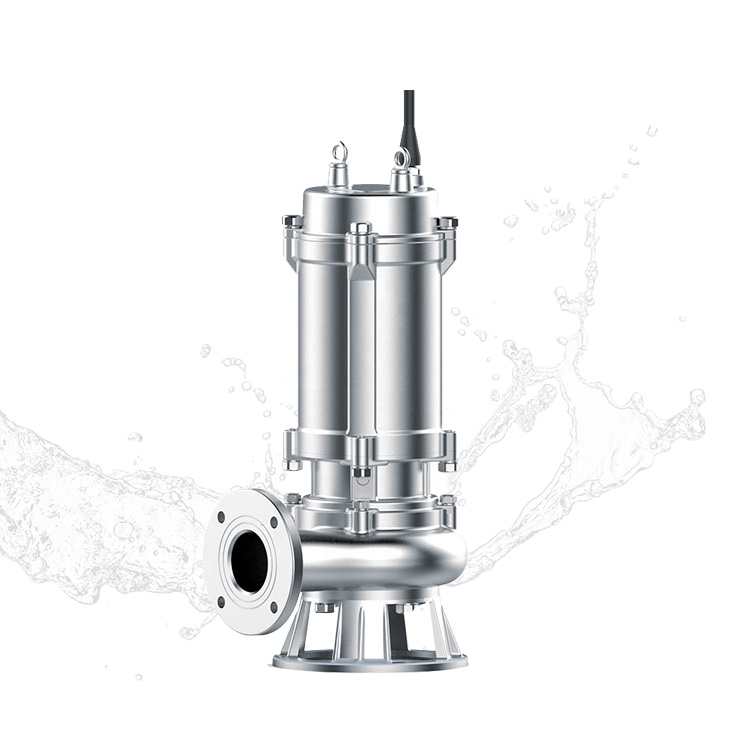
Our standard sewage pumps (such as the WQP Series) are the “workhorses” of municipal and industrial drainage.
-
Design Philosophy: These pumps utilize a closed Impeller design. The goal is “High-Passage” capability—allowing solid spheres (often up to 80mm depending on the model) to flow through the pump casing without obstructing the mechanism.
-
Material Versatility: Available in Cast Iron, SS304, SS316, and Duplex Stainless Steel to handle everything from neutral greywater to highly corrosive chemical runoff.
-
Key Features: Double Mechanical Seals: Tungsten Carbide/Silicon Carbide interfaces ensure the motor remains dry even under high-pressure immersion.
-
High Temperature Resistance: Specific HTR models can handle media up to 100°C.
-
Primary Use Case: Best for large-volume movement of wastewater containing soft solids, such as factory drainage, rainwater harvesting, and municipal treatment plants.
2. Submersible Cutting Pumps (Cutter Series)
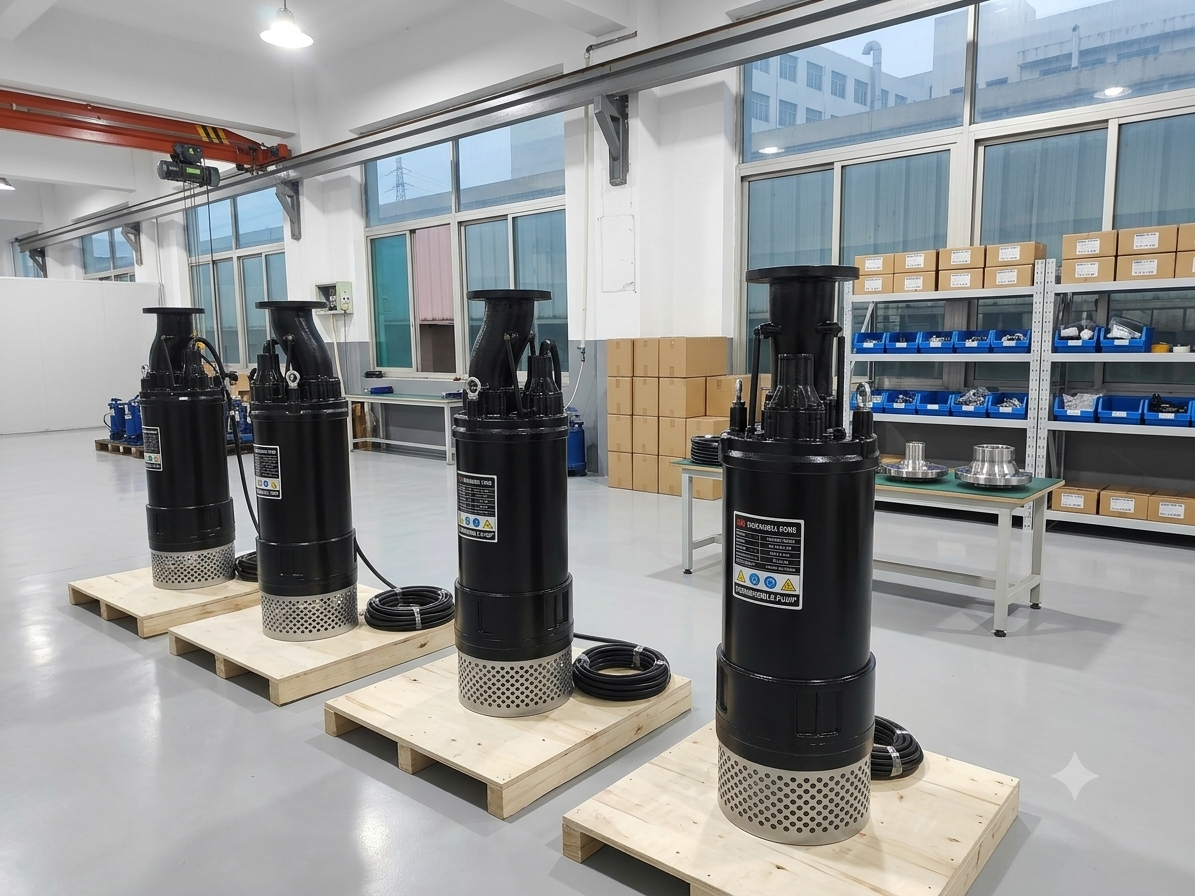
The Cutter Pump (such as the ATWQ Series) is an upgraded solution for “problematic” debris that would typically clog a standard pump.
-
Integrated Cutting Mechanism: These pumps feature a high-speed cutting system at the suction inlet. The impeller is equipped with Sintered Tungsten Carbide alloy tips that shear against a serrated suction cover.
-
The “Shredding” Action: Instead of just passing solids, this pump actively destroys them. It shreds long fibers, textiles, plastic bags, and organic matter into a fine slurry before they enter the volute.
-
Operational Benefits:
-
Anti-Clogging: Eliminates downtime caused by “ragging” (fibers wrapping around the shaft).
-
Small Pipe Compatibility: Because solids are pulverized, the discharge can be sent through smaller, more cost-effective piping networks.
-
-
Primary Use Case: Essential for facilities with “uncontrolled” waste inflow, such as hospitals, hotels, slaughterhouses, and public lift stations.
Quick Reference Comparison Table
| Feature | Standard Sewage Pump | Submersible Cutting Pump |
| Hydraulic Logic | Large solids “pass through” | Solids are “shredded” first |
| Impeller Type | Vortex / Wide-Channel | Alloy-tipped Cutter Impeller |
| Solids Handling | Soft, spherical solids | Long fibers, rags, and plastics |
| Discharge Piping | Requires large-diameter pipes | Suitable for smaller pipelines |
| Efficiency | Higher hydraulic efficiency | Slightly lower (power used for cutting) |
| Maintenance | Low (no cutting edges to wear) | Requires periodic blade inspection |
Why Choose Tussu Pumps?
Regardless of the model, our pumps share a foundation of industrial-grade reliability:
-
100% Copper Windings: Ensures stable power output and thermal longevity.
-
IPX8 Protection: Guaranteed waterproof integrity for deep-submersion tasks.
-
Automatic Protection: Integrated thermal and overload sensors prevent motor burnout during unexpected jams.
-
Global Customization: We support various voltage/frequency requirements (e.g., 220V/60Hz, 440V/50Hz) for international markets.