Skip to content

Q1: Is this pump easy to clog? What if it sucks in rags or debris?
A: We designed our WQ/WQX series with extra-wide internal passages, so common debris like cans or thick rags can pass through without sticking. For extra-tough environments with heavy solids, we offer a Cutter System option. It works like a grinder, shredding debris before it enters the pump to prevent jamming.
Q2: It’s underwater—what happens if it leaks or the motor gets wet?
A: Safety is our priority. TUSSU pumps have a “Double Insurance” system:
-
First Line of Defense: We use high-grade Double Mechanical Seals that act like a heavy-duty door, keeping water out of the motor.
-
Second Line of Defense: We install Moisture Sensors. If even a tiny bit of water gets in, the pump alerts you or shuts down immediately. This protects the motor from burning out, saving you from expensive replacement costs.
Q3: My old pumps wore out in months. Is the TUSSU pump durable against sand?
A: Sewage is often gritty. That’s why TUSSU uses thickened impellers made from High-Chrome Alloy or wear-resistant cast iron. Think of it as “armor” for the heart of the pump—it typically lasts 30%-50% longer than cheaper, standard pumps on the market.
Q4: Is installation difficult? Do I need to get into the dirty pit to install it?
A: Not at all. We provide an Auto-Coupling System. You simply install the guide rails in the pit once. Then, you lower the pump down the rails with a hoist, and it automatically “clicks” and seals into the base. For maintenance, just lift it back up—no need for workers to touch the sewage.
Q5: If I need a spare part in the future, is it hard to find?
A: We use international standard sizes for all wearing parts like bearings, seals, and O-rings. You can order original spares directly from TUSSU, or because we follow global standards, you can often find compatible parts at your local industrial supply store in an emergency.
Q6: How do I know the pump actually works before you ship it?
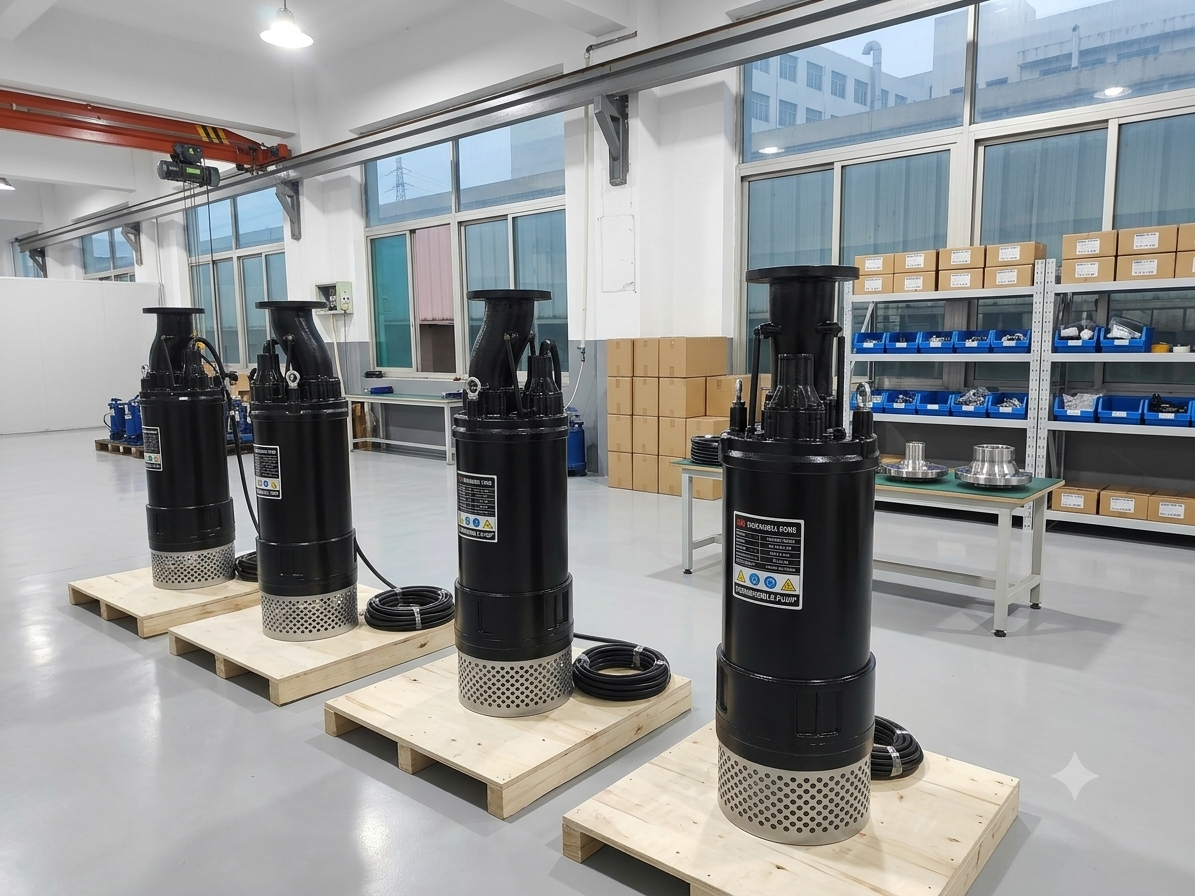
A: Every single TUSSU pump must pass a “Final Exam” in our factory testing tank. We run it with electricity and water to record its actual pressure and flow. If you’d like, we can send you a testing video of your specific pump before it leaves our dock so you can see it’s 100% ready for work.